1 Background
In April 2010, West Sussex County Council began a 25-year private finance initiative (PFI) street lighting contract with Tay Valley Lighting and its operating subcontractor, Enerveo.
The catalyst to this was that our ageing stock required significant investment to enable the council to continue to deliver a sustainable and efficient lighting system. Our aim was to:
- replace most of the ageing street lights, illuminated signs and bollards over the initial 5 year period
- introduce economic benefits by designing roads to the latest specifications
- reduce the equipment where possible
Back in 2010, LED technology was not affordable and, more importantly, reliability was unproven. West Sussex County Council and other authorities entering a PFI at this time chose to go with more reliable lanterns that still delivered energy savings of around 25 per cent over the previous equipment. During this period the street light lanterns were changed to the most efficient and reliable units available at that time.
Since 2010, technology has advanced, energy cost has significantly increased and there is additional pressure and desire to reduce the impact on the environment.
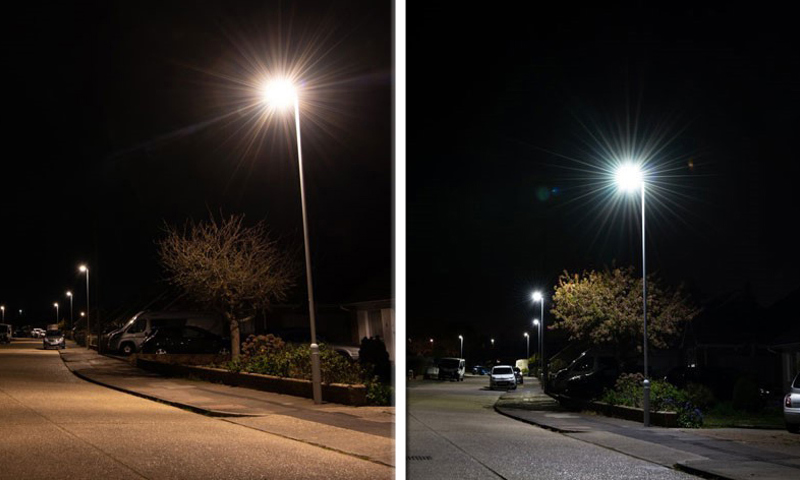
It is now considered a viable option to replace traditional lighting with LED equipment. The new LEDs generate the same light output with considerable less energy usage. They also have a greatly extended life compared to the traditional lanterns that require a lamp change every 4 years.
There are currently approximately 2,200 LED lanterns in use around West Sussex, with the majority of the South Downs National Park converted to assist in achieving the Dark-Sky Policy Plan. These LED units have achieved the same lighting levels as the traditional lanterns and have had no reported issues or associated maintenance concerns.
2 Why we are doing this work
Streetlights are the third biggest consumer of energy and creator of carbon for the county council. Converting streetlights to LED will significantly reduce both our use of electric and creation of carbon, helping us reach our target to become a carbon neutral organisation by 2030.
It will reduce electrical consumption and carbon emissions. The reduction in energy used will lower revenue costs and contribute to our carbon emission-saving targets.
Additionally, increasing pressure on the West Sussex County Council maintenance budget, coupled with ongoing increases in energy costs, has required us to develop strategies to ensure that street lighting can be maintained.
LED street lighting is now the mainstay of industry suppliers; this has led to the reduction in cost of new equipment and in most cases LED lanterns are now cheaper than conventional lighting. LED lanterns are also much more efficient and usually deliver at least a 50 per cent energy saving.
The implementation of a LED conversion programme will give West Sussex County Council the opportunity to reduce:
- the frequency of routine maintenance and the number of visits and associated traffic management required - this will have a direct effect on the amount of disruption to the highway network and reduce the monthly revenue spend
- upward light emissions in support of the Dark-Sky Policy Plan. Due to the design of the LED lanterns, there is a cleaner cut-off of light, ensuring the light is directed where required. However, this cannot be quantified as the upward light will be affected by reflections off the road surface and other objects
This will help us save money, and the reduction in visits will reduce the need for traffic management and the resultant traffic delays.
These benefits, along with the installation of a central management system (CMS), will reduce energy consumption, improve energy monitoring and bring maintenance savings that will enable West Sussex County Council to recover the cost of this project within 13 years.
3 What we are doing
The project will replace all the West Sussex County Council-owned street lights that are not already LED.
This equates to 65,249 lanterns.
The project focuses on changing the lanterns (the light emitting bit at the top). However, in a small number of locations, we may need to reposition columns or install new ones to maintain safe and effective lighting and ensure that the lighting still meets the national lighting standards.
During the lantern change a central monitoring system (CMS) will be installed. This is mounted on the lantern and replaces the unit that used to switch the lantern on or off depending on the light level.
4 The project
The replacement of the existing lanterns with LED lanterns commenced in July 2022 and is planned take 4 years to complete.
The implementation started in the area where street lighting uses the most energy and then moves through the county to ensure efficient future maintenance.
For more information on the project, including timescales and to track progress, visit our project page.