


Introduction
Introducing new technology
As part of its preventative approach to highway maintenance, we have invested in a new thermal road repair unit which heats, rejuvenates and reworks the existing asphalt in place, reducing the need for excavation of damaged sections of carriageway.
The new repair technique means multiple potholes can be treated at the same time, increasing the number of defects that can be treated earlier, before they become a large pothole, extending the life of the surface and reducing future maintenance costs.
This new process reduces the amount of material used, as only a small amount of new material needs to be added when completing repairs, lowers carbon emissions and improves productivity and efficiency.
Find out how we are doing in your area
Use our interactive reports to see how we're doing where you live.
View data for how many reports we have received and how many repairs we've carried out:
- all reports received by our Highways team. These reports can relate to a number of subjects, including overgrown vegetation, drainage issues, potholes and street furniture
- the number of pothole reports received
- the number of repairs made within each prioritisation category. These reports show data for pothole repairs completed using the ‘sides sawn and sealed’ and ‘unsawn’ repair techniques. They do not include data for repairs carried out using ‘spray injection patching’ or mastic asphalt.
- weather data, looking specifically at days of frost and rainfall levels.
Each report can be viewed for the entire county or filtered by district.
How we repair potholes
We use three main methods to repair potholes on our roads:
- Sawn repairs, which involves cutting out the defective area of the highway to create solid edges around the pothole, breaking out the entire cut area to a solid base, sealing the area with a bituminous seal, then backfilling and compacting with the appropriate surfacing material. Sawn repairs are used in more urban, high-traffic areas.
- Unsawn repairs, which involve removing all failed material, sealing the area with a bituminous seal, then backfilling and compacting with the appropriate surfacing material. This repair type will only be used when a sawn repair is not practical and when a quick repair is needed to remove a safety issue, for example, large areas of the road have structurally failed.
- Spray injection patching, which uses high velocity air to clear out any debris from the pothole before applying a coat of cold bitumen emulsion to provide a waterproof seal, followed by a mixture of aggregate and bitumen emulsion to form the repair before compacting the area down. Spray patching is used in rural areas to tackle both potholes and other areas where the road is showing signs of weakening.
- Mastic asphalt. As part of our continued efforts to ensure the repair techniques we use are durable, consistent quality and cost effective, we have also been carrying out a 3 month trial of mastic asphalt to repair potholes in high stress areas on our roads such as junctions. Over the trial period, we’ve completed 3000sqm of durable, highly waterproof defect repairs.
We also deliver a number of other activities to manage carriageway deterioration:
- Small hand-patching resource, delivering high quality permanent sawn repairs up to 20sqm per site.
- Large hand-patching resource, delivering high quality permanent sawn repairs up to 100sqm per site.
- Large machine-patching resource, delivering high quality permanent sawn repairs up to 500sqm per site.
How potholes form
-
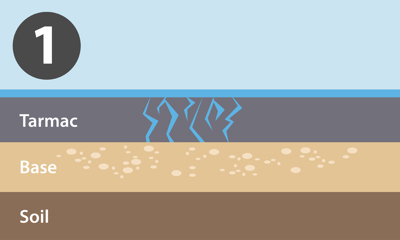
Water seeps through cracks in the road surface, collecting in the layers of road construction. -
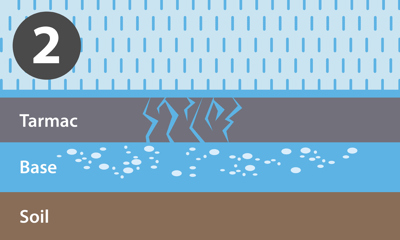
Over time, water continues to saturate the layers of road construction, softening and creating small voids which creates weak areas. -
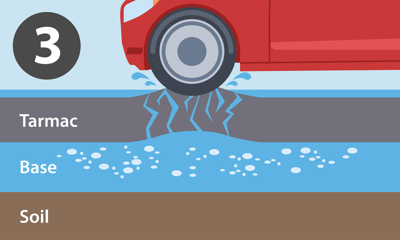
When the water freezes, it creates expansion in the road construction, creating larger voids and weakness, which leads to the road surface cracking and holes appearing. -
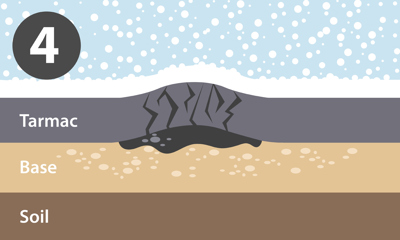
The cycle of freezing temperatures and thawing, along with prolonged saturation, causes continued weakness and the holes in the road surface increase. Traffic adds stress to weakened areas. -
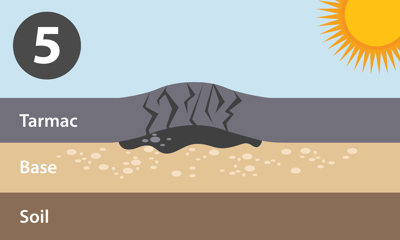
Potholes can continue to form during summer months, usually where the road has been impacted and weakened by the previous wet and cold weather. -
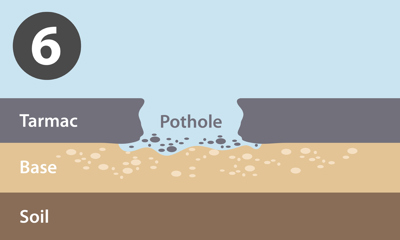
The stress and weight of traffic breaks up the road surface to form a pothole. Wear from traffic expands the hole.


Handling extreme weather
During the hot weather, crushed granite was applied to affected roads to help bind and stabilise the surface.
Now the temperatures have dropped these roads are being fully inspected, with patching and remedial works completed where necessary. Where the affected area is too large for patching, roads will be scheduled for hydro-blasting treatment or resurfacing.
Other maintenance
It's not just about potholes, our Highways Operations teams also manage: