

Greenprint

Greenprint: innovation for greener highways
Greenprint was a 3-year joint project between West Sussex County Council and South Gloucestershire Council. It tested new ways of looking after highway verges.
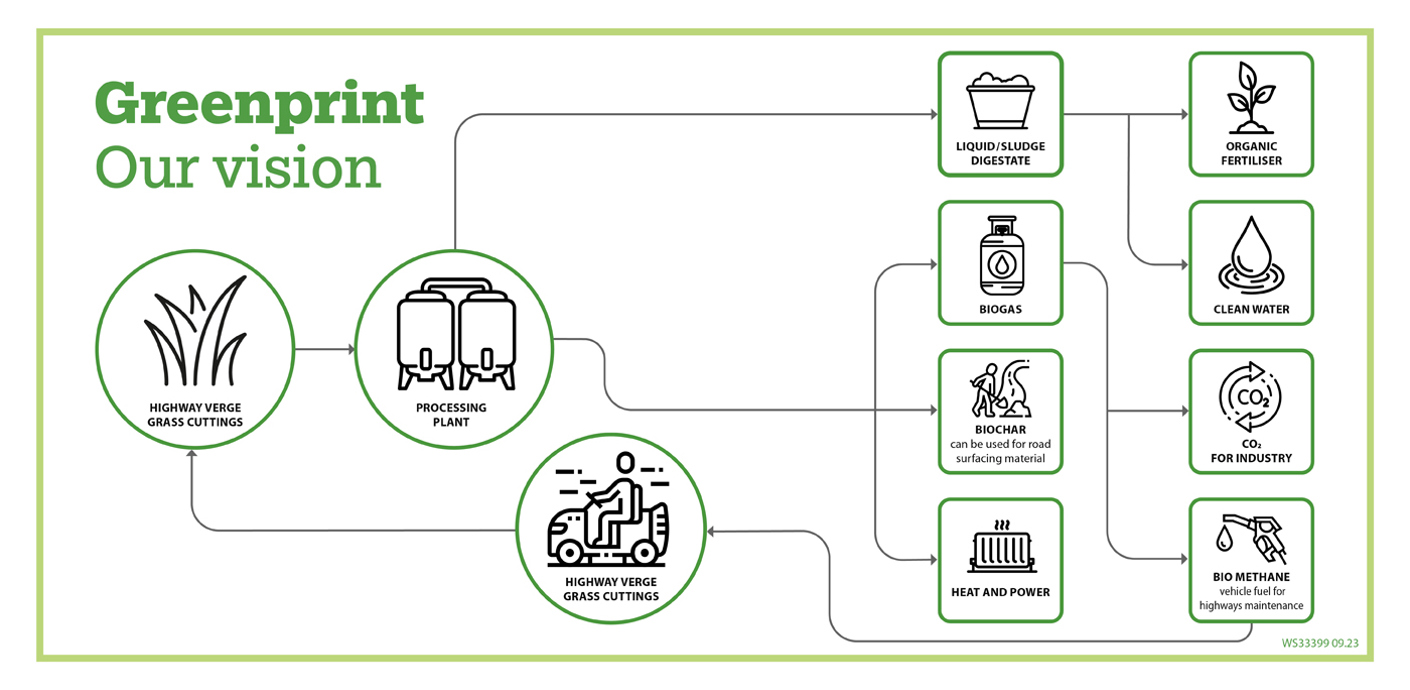
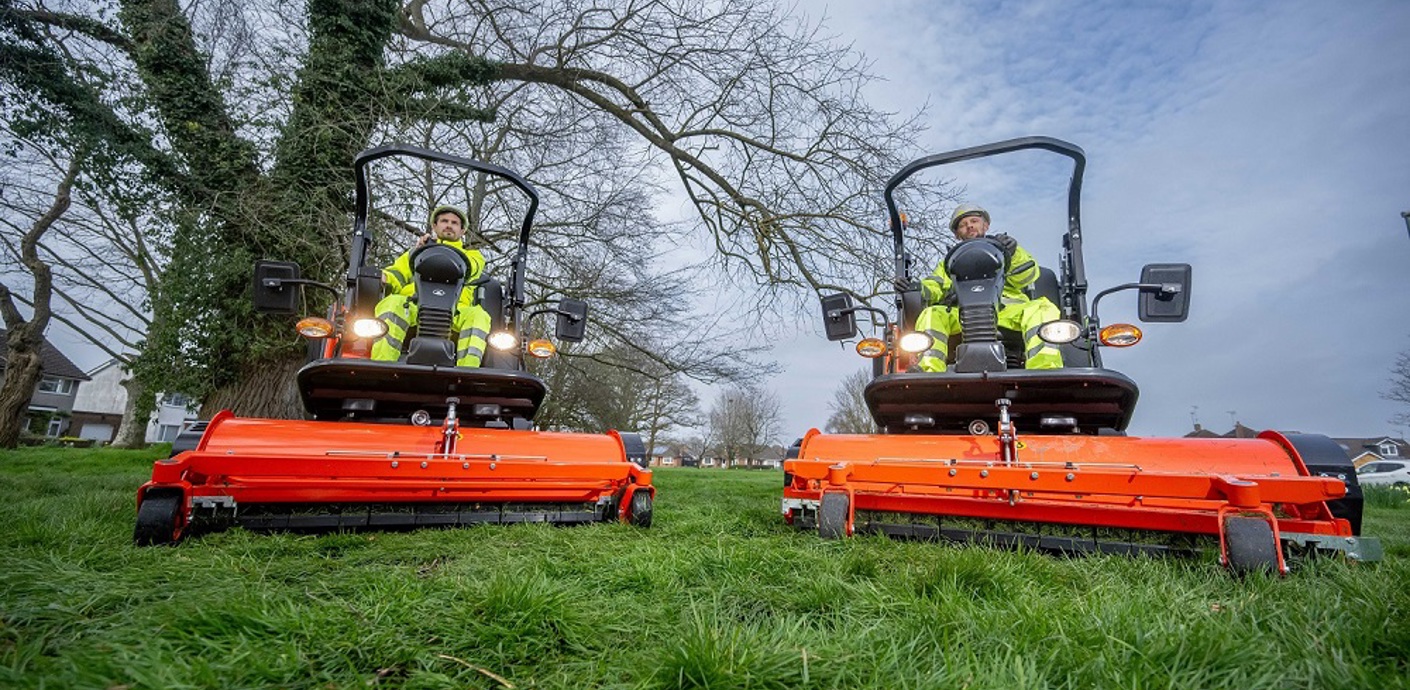
Instead of leaving grass cuttings from green spaces and verges on the ground, we collected them and investigated turning them into something useful, such as biofuels and road construction materials.
Collecting these grass cuttings slows grass growth and encourages a wider variety of plant life and pollinators, boosting local biodiversity.
Learn about:
- what happened to the grass we cut
- how Greenprint benefitted plants and wildlife
- how it supported our work to protect the environment
Project background
Live Labs 2
Greenprint was part of the nationwide ADEPT Live Labs 2: Decarbonising Local Roads in the UK project. It was a 3-year plan to help make local roads greener and cleaner. The Department for Transport (DfT) gave £30 million of funding to the project. Greenprint was one of 7 groups from across the UK, between Lanarkshire and Devon, that received a share of the funding.
We worked together with South Gloucestershire Council to test new ways of looking after highway verges. We collected grass cuttings from selected green spaces and verges and we turned them into biofuels and biochar.
We then added the biochar to asphalt used in road construction to store the carbon for the long term, rather than releasing it into the atmosphere. Along with other initiatives from the LL2 programme, it has the potential to make road construction more eco-friendly.
Project update
June 2026
The 3-year Greenprint project has now come to an end and the findings are as follows:
Lower carbon impact: Collecting grass cuttings instead of leaving them to rot cuts emissions by avoiding it decomposing in the open. Using it in anaerobic digestion, where it is transformed into energy, delivers immediate carbon savings. For example, 100% of grass cuttings entered into AD processing equated to a carbon saving of up to 3.45 tonnes of CO₂ per hectare of area cut. This compares to the traditional cut-and-drop approach of 0.345 tonnes of CO₂ per hectare.
Turning grass cuttings into biochar can also lock carbon away for the long term. For every tonne of biochar produced, 2 tonnes of CO₂ could be captured.
Costs today: Collecting the grass cuttings costs approximately 2.6 times more than leaving them (cut-and-drop), due mainly to the cost of labour and machine reliability. However, there are clear ways to make it cheaper over time, such as through fewer cuts, better equipment, increasing the scale of the grass cut and integrating waste logistics. The latter could perhaps be via existing contractual arrangements using vehicles or premises already handling other waste streams, such as green waste.
Future investment: Machines that turn grass into energy or biochar cost a lot of money. They only work well if people can sell what they produce. At the moment, the market is still growing, but it is expected to get bigger and become more stable over time.
Better wildlife: Removing cut grass helps improve wildflowers and insects by stopping soil becoming too rich. It is one of the strongest means available to improve verge biodiversity.
Early signs are positive, but it needs several years to fully prove the benefit. This is why we are continuing to manage 6 small areas in Horsham to study the long-term effects of biodiversity while doing just 2 cut-and-collect operations this year.
Public response: Staff adapted quickly when involved early and the public response has been positive, with cleaner verges, less litter and no rise in complaints.
The next steps are:
- to continue to use the cut-and-collect method on biodiversity sample sites in Horsham
- to share the results of our experiment and make our guidance available to other local government authorities and stakeholders
- to conduct a feasibility study to see how pyrolysis and the use of biochar can be progressed in West Sussex
- for the Future Highways Research Group, to build on our findings by analysing more deeply local electricity production using biogas from anaerobic digestion and biochar production through pyrolysis of grass cuttings and green waste.
Full details on the findings of the project are available in the Thought Leadership Report.
If you're interested in adopting this strategy for your Local Government Authority or organisation, download the Greenprint: How to Guide which provides information on communications, operations, processing and markets/revenue.